

How Many Dioptres Do You Need Before Wearing Glasses?
There is no minimum number of dioptres at which everyone must start wearing glasses.
Whether you need glasses depends on:
- The type of refractive error.
- The strength of the prescription.
- Your uncorrected visual acuity.
- Your symptoms.
- The difference in prescription between the two eyes.
- Your age.
- Your day-to-day activities.
- Whether you need to drive or carry out precision work.
Someone with a low prescription may still need glasses if they experience blurred vision, eye strain or difficulty driving. Another person with a similar prescription may manage well without glasses for certain activities.
As a general guide:
- Mild short-sightedness may mainly need correcting for distance vision.
- Mild long-sightedness may cause no symptoms in younger people, but it can lead to eye strain in others.
- Even mild astigmatism can cause blurred vision or headaches.
- Presbyopia needs correcting when it makes reading or close work difficult.
The decision should not be based solely on the number of dioptres. A refraction test shows how much your vision improves and which correction feels genuinely comfortable.
What Are Dioptres?
A dioptre is the unit used to express the optical power of a lens.
On a glasses prescription, it indicates the correction needed to compensate for a refractive error.
The main refractive errors are:
- Short-sightedness.
- Long-sightedness.
- Astigmatism.
- Presbyopia.
The values may be shown with a plus or minus sign.
In general:
- Negative dioptres are usually used to correct short-sightedness.
- Positive dioptres may be used to correct long-sightedness or presbyopia.
- The cylinder and axis indicate the correction for astigmatism.
The prescription may be different for each eye.
Is There a Minimum Prescription for Wearing Glasses?
There is no universal minimum.
The need for glasses depends on how the prescription affects the person’s vision and daily activities.
For example, a low prescription may still be important if the person:
- Drives for long periods.
- Works with screens.
- Needs to see detail clearly at a distance.
- Carries out precision work.
- Experiences headaches or eye strain.
- Has a different prescription in each eye.
It also matters whether the correction clearly improves visual quality during the test.
When Do You Need Glasses for Short-Sightedness?
Short-sightedness mainly affects distance vision.
The lenses used to correct it are expressed as negative values.
There is no fixed threshold, but even mild short-sightedness can cause:
- Difficulty reading road signs.
- Difficulty recognising faces at a distance.
- Blurred vision when looking at the classroom board.
- Lack of confidence when driving.
- The need to squint.
As a practical guide:
| Approximate prescription | Possible effect |
| -0.25 dioptres | May be barely noticeable or slightly improve distance clarity |
| -0.50 dioptres | May start to become noticeable when driving, reading signs or looking at distant screens |
| -0.75 to -1.00 dioptres | Distance vision is usually clearly affected and glasses are often helpful |
| More than -1.00 dioptres | Correction is generally needed for clear distance vision |
These values are only a guide and do not replace a sight test.
Someone with a prescription of -0.50 may need glasses for driving, while another person may only wear them at the cinema, in class or when watching television.
Do I Have to Wear Glasses with a Prescription of 0.25 Dioptres?
Not necessarily.
A prescription of 0.25 dioptres is low, and some people may not notice a significant difference with correction.
Glasses may be recommended when:
- They clearly improve visual sharpness.
- Astigmatism is present.
- There is eye strain.
- The person carries out tasks that require precision.
- There is a difference in prescription between the two eyes.
In other cases, glasses may not need to be worn regularly.
Do You Need to Wear Glasses with a Prescription of 0.50 Dioptres?
It depends on the type of prescription and the symptoms.
With -0.50 dioptres of short-sightedness, some loss of distance sharpness may be noticeable, especially:
- When driving at night.
- When reading road signs.
- At the cinema.
- In class.
- When taking part in certain sports.
With +0.50 dioptres of long-sightedness, a younger person may compensate for the refractive error without noticing blurred vision, although they may experience eye strain during close work.
An astigmatism prescription of 0.50 dioptres may be insignificant for some people and troublesome for others.
When Do You Need Glasses for Long-Sightedness?
Long-sightedness is usually expressed as positive values.
Younger people can compensate for some long-sightedness through the eye’s natural focusing mechanism.
For this reason, mild long-sightedness may not cause obvious blurred vision.
However, it can cause:
- Eye strain.
- Headaches.
- Discomfort after reading.
- Difficulty maintaining focus.
- Blurred near vision.
- Squint in some children.
Whether glasses are needed depends on:
- Your age.
- The degree of long-sightedness.
- The person’s focusing ability.
- The symptoms.
- Eye alignment.
- The difference between the two eyes.
In children, this assessment is particularly important because a high or unequal degree of long-sightedness can interfere with visual development.
How Much Astigmatism Requires Glasses?
There is no exact threshold.
Some people tolerate mild astigmatism without symptoms, while others experience:
- Blurred vision.
- Shadows or ghosting around letters.
- Headaches.
- Eye strain.
- Glare at night.
- Difficulty seeing fine detail.
Even prescriptions of 0.50 or 0.75 dioptres can improve vision in people who are particularly sensitive or have demanding visual needs.
The axis of the astigmatism is also important, not just its strength.
When Do I Need Glasses for Presbyopia?
Presbyopia, or age-related long-sightedness, develops when the eye’s natural lens loses its ability to focus on nearby objects.
A prescription is not based solely on age or a fixed number.
Glasses are recommended when the person has difficulty:
- Reading.
- Using a mobile phone.
- Working at a computer.
- Threading a needle.
- Reading labels or small print.
The required lens power depends on:
- The distance prescription.
- Your age.
- The working distance.
- The remaining focusing ability.
- The type of activity.
Someone who works at a computer 70 centimetres away will not necessarily need the same correction as someone who reads at 35 centimetres.
When Should Glasses Be Worn All Day?
Glasses may be recommended throughout the day when:
- Vision is blurred during most activities without them.
- The prescription is moderate or high.
- There is a significant difference between the two eyes.
- The person needs consistently clear vision.
- The correction improves coordination between the two eyes.
- The patient is a child and the glasses are needed for normal visual development.
With low prescriptions, glasses may only be needed for specific activities.
When Can I Wear Glasses Only for Driving?
Occasional use may be recommended for mild short-sightedness or astigmatism that mainly affects distance vision.
The glasses may be worn for:
- Driving.
- Going to the cinema.
- Watching television.
- Attending classes.
- Watching live performances.
- Playing sports.
Your ability to meet the visual requirements for driving should be assessed with an eye examination, not by the number of dioptres alone.
Can I Drive Without Glasses If I Have a Low Prescription?
It depends on your uncorrected visual acuity and any conditions stated on your driving licence.
A seemingly low prescription may have a greater effect:
- At night.
- In the rain.
- In fog.
- When facing bright lights.
- When reading road signs at a distance.
A low prescription should not be assumed to guarantee adequate vision for driving.
Do Children Need Glasses with a Low Prescription?
In childhood, the decision is not based solely on the strength of the prescription.
The following are also assessed:
- The child’s age.
- Visual acuity in each eye.
- The difference in prescription.
- The presence of a squint.
- The risk of amblyopia.
- The child’s focusing ability.
A child may need glasses for a relatively low prescription if there is a significant difference between the two eyes.
Conversely, some mild cases of long-sightedness can be monitored if they do not affect vision or eye alignment.
Children’s prescriptions are usually measured using eye drops that temporarily relax the eye’s focusing mechanism.
What Happens If I Need Glasses but Do Not Wear Them?
In adults, not wearing glasses usually causes mainly:
- Blurred vision.
- Eye strain.
- Headaches.
- Squinting.
- Difficulty driving.
- Reduced comfort during visually demanding tasks.
Not wearing them does not usually cause the eyes to deteriorate automatically.
However, it can reduce safety and limit certain activities.
In children, not wearing the prescribed correction can affect visual development and contribute to amblyopia, or lazy eye.
Does Wearing Glasses Make Your Prescription Worse?
No.
Glasses compensate for the refractive error while they are worn, but they do not make the eyes weaker.
A prescription may change because of:
- Growth of the eye.
- Progression of short-sightedness.
- Presbyopia.
- Changes in the natural lens.
- Diabetes.
- Other eye conditions.
Once people become used to seeing clearly, they may notice the blur more when they remove their glasses. This does not mean that the glasses have made their eyes worse.
Can Wearing a Weaker Prescription Stop Dioptres from Increasing?
Deliberately reducing the prescription without professional advice is not recommended.
Insufficient correction can cause:
- Blurred vision.
- Tired eyes.
- Difficulty driving.
- Reduced visual performance.
For children with short-sightedness, controlling progression requires specific strategies and follow-up, not simply prescribing a weaker correction.
How Is a Glasses Prescription Determined?
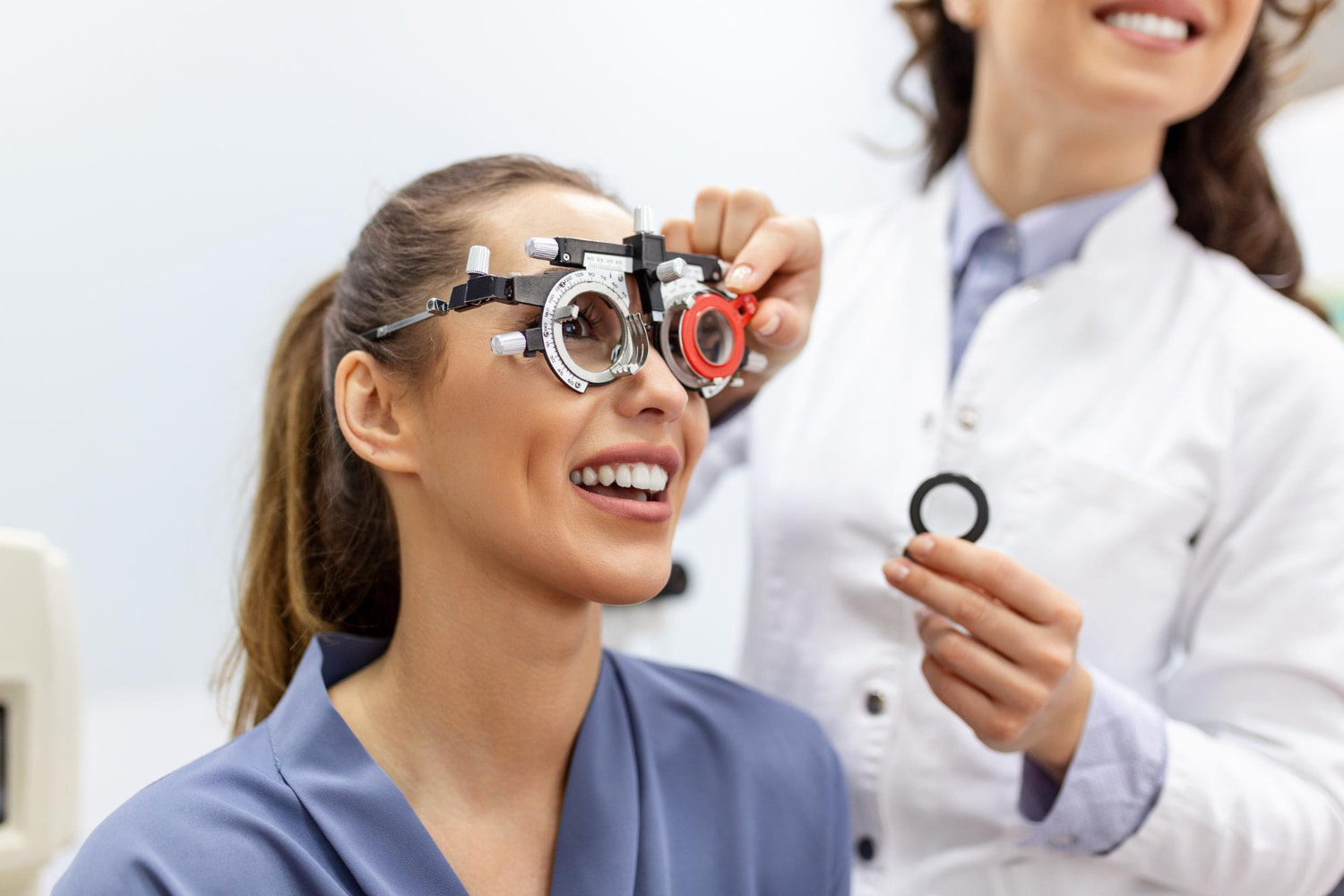
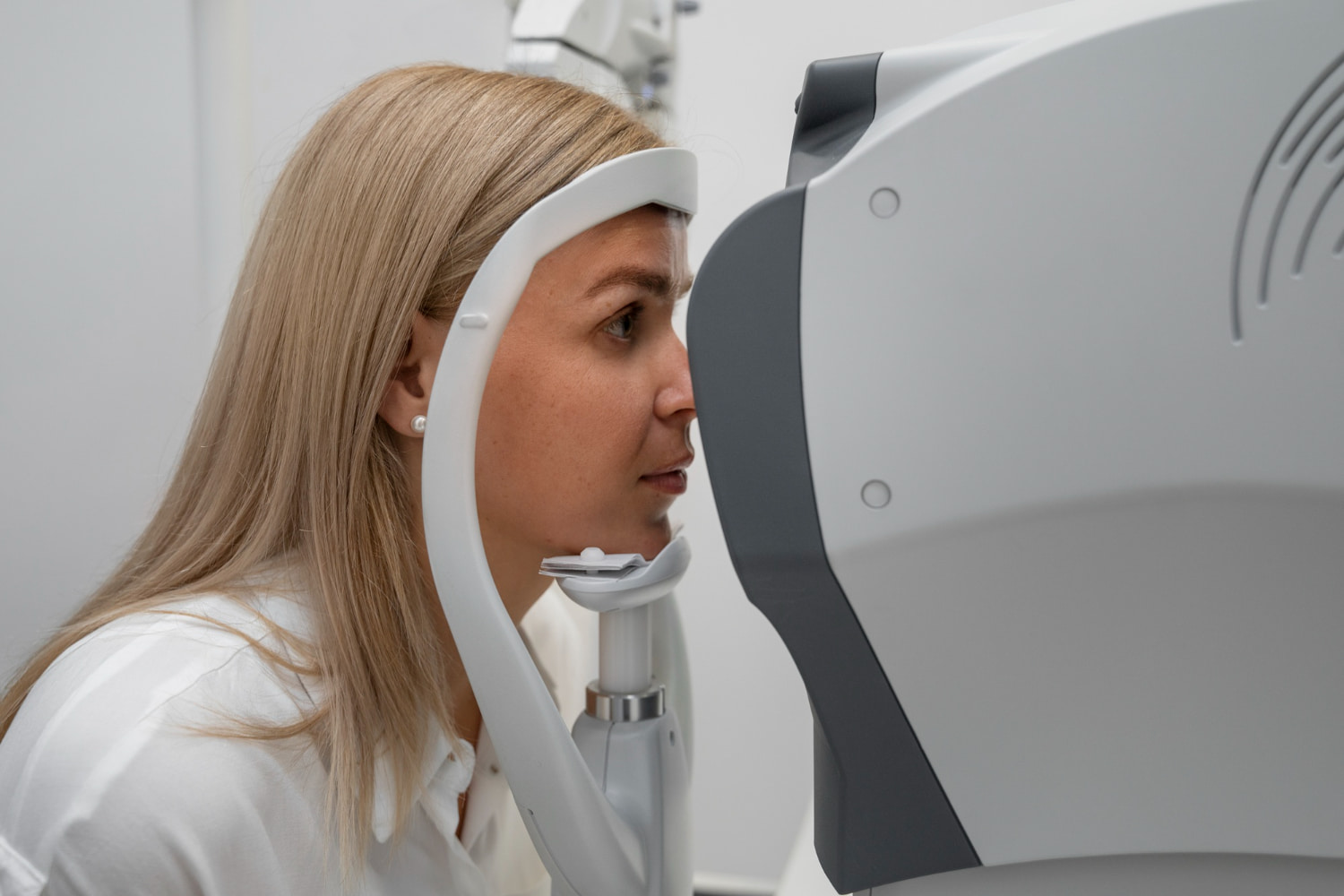
During a refraction test, the following are assessed:
- Visual acuity in each eye.
- The objective refraction measurement.
- The response to different lenses.
- The degree of astigmatism.
- The balance between the two eyes.
- How comfortable the correction feels.
- The person’s visual needs.
The best prescription is not always the strongest lens.
It should provide vision that is:
- Clear.
- Comfortable.
- Stable.
- Suited to everyday activities.
What Symptoms Suggest That I May Need Glasses?
It is advisable to have your prescription checked if you notice:
- Blurred distance vision.
- Blurred near vision.
- The need to squint.
- Difficulty reading road signs.
- Needing to hold your phone farther away.
- Headaches related to visually demanding tasks.
- Eye strain.
- Glare.
- Difficulty driving at night.
- A difference in vision between the two eyes.
These symptoms can also be caused by eye conditions, so new glasses will not always resolve them.
When Is Blurred Vision Not Caused Solely by Your Prescription?
The correct glasses prescription cannot fully correct problems such as:
- Cataracts.
- Glaucoma.
- Macular degeneration.
- Dry eye.
- Corneal conditions.
- Retinal diseases.
- Optic nerve damage.
A comprehensive eye examination is needed when:
- Vision does not improve sufficiently with lenses.
- The change occurs suddenly.
- Only one eye is affected.
- Straight lines appear distorted or there are spots in your vision.
- Eye pain develops.
- The prescription changes rapidly.
How Often Should Your Prescription Be Checked?
As a general guide, an adult without symptoms can have their vision checked every one to two years.
More frequent check-ups may be needed if:
- You are a growing child.
- You have progressive short-sightedness.
- You wear contact lenses.
- You have diabetes.
- You have a high prescription.
- You have an eye condition.
- You have noticed a recent change.
You can find out more in our article on how often to have an eye examination.
Common Mistakes When Deciding Whether to Wear Glasses
Relying Only on the Number of Dioptres
The impact also depends on visual acuity, symptoms and each person’s individual needs.
Wearing Someone Else’s Glasses
Every prescription contains different values for each eye, including the degree and axis of astigmatism.
Buying Reading Glasses Without Having Your Eyes Checked
Ready-made reading glasses have the same power in both lenses and do not correct astigmatism.
Thinking That Glasses Weaken Your Vision
Glasses provide a focused image, but they do not make the eyes dependent on them.
Ignoring Sudden Blurred Vision
A sudden change may be related to an eye condition rather than simply a change in prescription.
Believing That a Low Prescription Never Requires Glasses
A low prescription can still be important for driving, studying or carrying out precision work.
Frequently Asked Questions About Dioptres and Wearing Glasses
At What Prescription Do You Need Glasses?
There is no universal threshold. It depends on the type of prescription, symptoms, visual acuity and each person’s individual needs.
Do I Need Glasses with a Prescription of 0.25 Dioptres?
Not always. They may be recommended if they clearly improve vision or reduce discomfort.
Should I Wear Glasses with a Prescription of 0.50 Dioptres?
It depends. For short-sightedness, they may be helpful for driving or distance vision; for long-sightedness or astigmatism, the recommendation depends on the symptoms.
Do You Need Glasses with 1 Dioptre of Short-Sightedness?
Distance vision will usually be affected enough for glasses to provide a clear improvement.
Can I Wear My Glasses Only for Driving?
Yes, if the prescription mainly affects distance vision and you do not need correction for other activities.
Do I Have to Wear My Glasses All Day?
It depends on the prescription and how comfortable you feel. Some people need them all the time, while others only use them for specific activities.
Does Not Wearing Glasses Make Your Prescription Worse?
In adults, not wearing glasses does not usually cause the prescription to increase. However, it can cause blurred vision and reduce safety.
Do Glasses Make Your Eyes Lazy?
No. Glasses correct the blur while they are being worn.
Can a Low Prescription Cause Headaches?
Yes, especially when astigmatism, long-sightedness or prolonged visual effort is involved.
How Do I Know If I Need Glasses?
A refraction test checks how much your vision improves with different lenses.
Can I Use My Glasses Prescription to Buy Contact Lenses?
Not necessarily. Contact lenses require a specific fitting assessment.
Which Specialist Can Check My Prescription and Eye Health?
An ophthalmologist can assess your prescription and check whether another condition is affecting your vision.
Dioptres Are Not the Only Factor When Prescribing Glasses
There is no exact prescription at which everyone must start wearing glasses.
A low prescription may still be important for driving or precision work, while another person with a similar prescription may not need to wear glasses all the time.
At Centro Oftalmológico del Llano, we carry out a comprehensive assessment to check visual acuity, measure your prescription and rule out other causes of blurred vision.
You can find out more about our eye refraction service.