


How Often Should You Have an Eye Examination?
There is no single schedule that is right for everyone. How often you should have an eye examination depends on factors such as your age, family history, general health conditions, whether you wear glasses or contact lenses, and whether you have symptoms or an eye condition.
As a general guide, an adult with no symptoms or risk factors can have an eye examination every one or two years. However, some people need more frequent check-ups.
You should have your eyes examined more regularly if:
- You have diabetes.
- You have been diagnosed with glaucoma, cataracts or another eye condition.
- You have a family history of glaucoma or vision loss.
- You wear contact lenses.
- You have a strong prescription.
- You have had eye surgery.
- You take medication that can affect your vision.
- You have noticed recent changes in your vision.
Do not wait until your next scheduled examination if you develop sudden blurred vision, eye pain, flashes of light, a sudden increase in floaters, double vision, loss of vision or a very red eye.
Why Are Eye Examinations Important?
Many people see a specialist only when they notice that their vision has worsened or think they need a new glasses prescription.
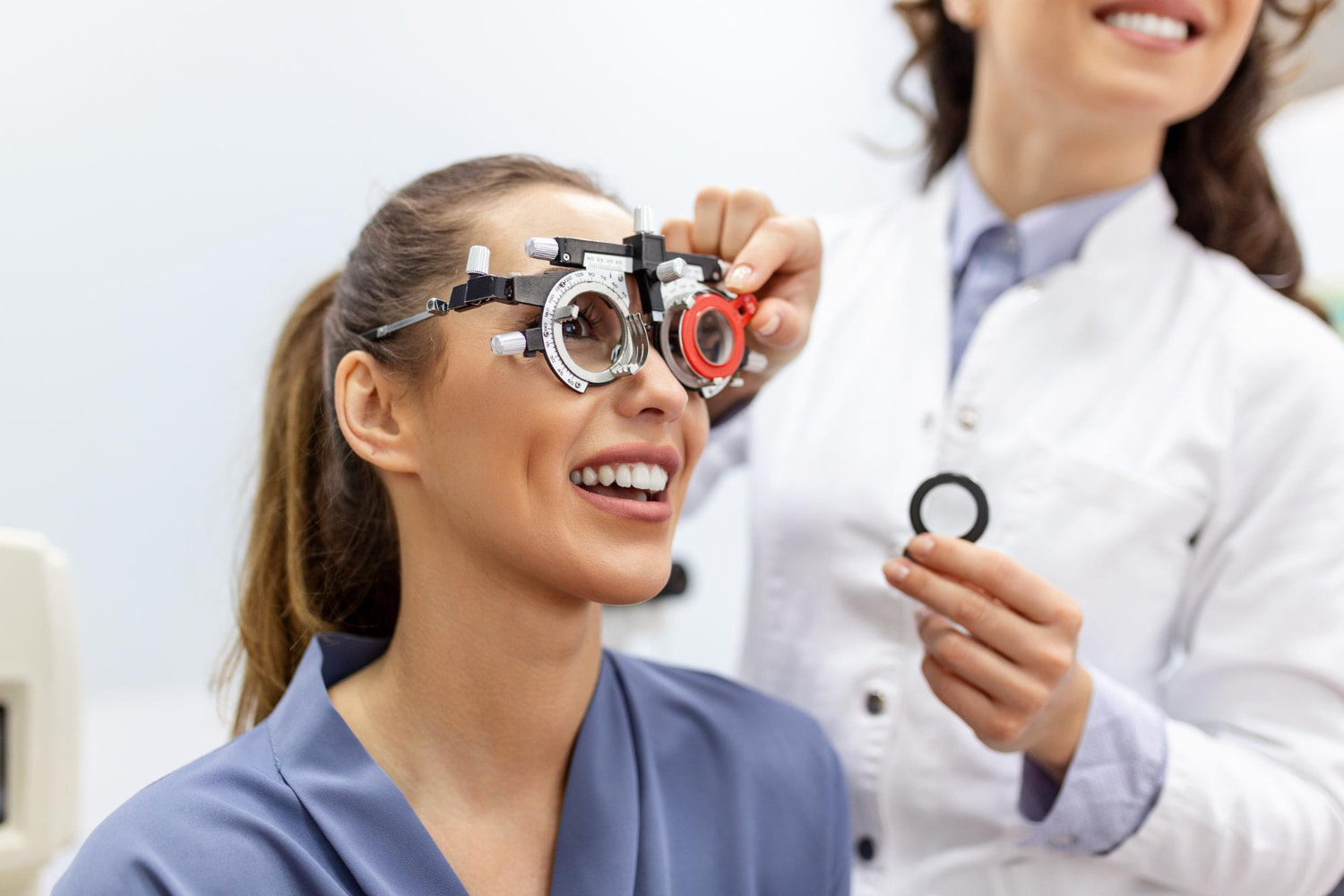
However, an eye examination is not only used to measure your prescription.
A comprehensive examination can assess:
- Visual acuity.
- Your prescription.
- Intraocular pressure.
- The cornea.
- The natural lens.
- The retina.
- The macula.
- The optic nerve.
- The eyelids and ocular surface.
- Eye coordination and movement.
This makes it possible to detect changes that may go unnoticed in their early stages.
Some eye conditions can progress without causing pain or obvious symptoms. That is why seeing well does not always mean that your eyes are completely healthy.
How Often Should a Healthy Person Have an Eye Examination?
For adults with no symptoms, no known eye conditions and no major risk factors, an eye examination every one or two years may serve as a general guide.
However, the frequency should be tailored to the individual.
Your ophthalmologist may recommend more frequent examinations if they find:
- Raised eye pressure.
- Changes in the optic nerve.
- Early signs of cataracts.
- Retinal conditions.
- Moderate or severe dry eye.
- Frequent changes in prescription.
- Eyelid lesions.
- A finding that needs monitoring.
The final recommendation should be based on the actual health of your eyes, not solely on your age.
Recommended Eye Examination Frequency by Age
Age affects the likelihood of developing certain vision problems.
The following table provides general guidance, but it does not replace an individual recommendation from your ophthalmologist.
| Age Group | General Guidance |
| Childhood | Routine paediatric checks and additional examinations if symptoms or risk factors are present |
| Adolescence | Every one or two years, or sooner if vision changes |
| Young adults | Every one or two years if there are no risk factors |
| From age 40 | Regular examinations tailored to your prescription and eye health risks |
| From age 60 or 65 | Generally every one or two years, and more often if an eye condition is present |
| People with an eye condition | According to the schedule recommended by the specialist |
Eye Examinations During Childhood
Vision develops during the first few years of life. Detecting a problem early can therefore make a significant difference.
Children do not always know how to explain that they cannot see clearly. In addition, when one eye sees well and the other does not, they may appear to function normally.
An eye examination can help detect:
- Short-sightedness.
- Long-sightedness.
- Astigmatism.
- Strabismus.
- Amblyopia or lazy eye.
- A significant difference in prescription between the two eyes.
- Congenital abnormalities.
- Problems with visual development.
In addition to routine paediatric check-ups, arrange an assessment with a specialist in paediatric ophthalmology if you notice any of the following signs:
- The child moves too close to objects.
- They narrow their eyes to see things in the distance.
- They frequently complain of headaches.
- They cover one eye to see.
- One eye turns.
- They trip frequently.
- They have difficulty reading or concentrating.
- There is a white reflex in the pupil.
- There is a significant family history of eye problems.
How Often Should a Teenager Have an Eye Examination?
During adolescence, the prescription can change quickly, especially in people with short-sightedness.
An examination every one or two years is usually a reasonable guide if there are no known problems.
Arrange an earlier examination if:
- It is difficult to see the board.
- The phone or computer is held too close.
- Headaches develop.
- Distance vision worsens.
- There is frequent eye strain.
- Contact lenses are worn.
For patients with progressing short-sightedness, the specialist may recommend more frequent check-ups to monitor changes.
Eye Examinations Between the Ages of 20 and 40
In young adulthood, it is common to think that eye examinations are unnecessary if your vision seems good.
However, at this stage an examination may detect:
- Uncorrected refractive errors.
- Problems associated with screen use.
- Dry eye.
- Problems caused by contact lens wear.
- Corneal lesions.
- Early signs of inherited eye conditions.
An examination every one or two years may be suitable for people with no symptoms or known risks.
The interval between examinations may need to be shortened if you have a family history of eye problems, a strong prescription or a general health condition linked to eye health.
Why Should You Have Your Eyes Examined After the Age of 40?
From the age of 40, age-related changes in vision become more common.
One of the best known is presbyopia, or age-related long-sightedness, which makes it harder to focus up close.
An examination may also begin to detect:
- Changes in eye pressure.
- Early signs of glaucoma.
- Changes in the natural lens.
- Changes in the retina.
- Ocular surface problems.
An examination at this age establishes a baseline against which changes in your eyes can be compared at future check-ups.
It is not simply a question of checking whether you need reading glasses, but of assessing your overall eye health.
How Often Should Someone Over 60 See an Ophthalmologist?
The following conditions become more common with age:
- Cataracts.
- Glaucoma.
- Age-related macular degeneration.
- Retinal vascular conditions.
- Dry eye.
- Eyelid and tear duct problems.
For older people with no known eye conditions, an examination every one or two years is usually reasonable.
If an eye condition is already present, check-ups may be annual, every six months or even more frequent.
The interval will depend on the diagnosis, how stable the condition is and the treatment being used.
How Often Should Someone with Glaucoma Have an Eye Examination?
Glaucoma is a chronic condition that requires long-term follow-up.
The frequency of appointments depends on:
- The type of glaucoma.
- Intraocular pressure.
- The condition of the optic nerve.
- Visual field test results.
- The rate of progression.
- The treatment being used.
- The response to eye drops, laser treatment or surgery.
Many patients with stable glaucoma are examined several times a year, although the schedule may vary.
Follow-up may include tests such as:
- Eye pressure measurement.
- Optic nerve examination.
- OCT.
- Visual field test.
- Pachymetry.
- Examination of the drainage angle.
Do not postpone these check-ups even if your vision seems stable, as glaucoma can progress without causing obvious symptoms.
How Often Should Someone with Diabetes Have an Eye Examination?
Diabetes can affect the blood vessels in the retina and cause diabetic retinopathy.
People with diabetes should follow the schedule recommended by their ophthalmologist and the healthcare professional responsible for their metabolic control.
As a general guide, regular eye examinations that include a fundus examination are usually recommended.
More frequent examinations may be needed when:
- Diabetic retinopathy is present.
- Blood glucose control is unstable.
- High blood pressure is present.
- There are kidney problems.
- Vision has deteriorated.
- The patient is pregnant.
Diabetic retinopathy can progress without symptoms in its early stages, so you should not wait until you notice blurred vision before arranging an examination.
How Often Should I Have an Eye Examination If I Have a Family History of Glaucoma?
People with a close relative affected by glaucoma are at greater risk than the general population.
This is particularly relevant when the affected relative is a:
- Parent.
- Sibling.
- Child.
In these cases, more frequent examinations may be advisable even if your vision is good and you have no pain.
A comprehensive examination should include an assessment of eye pressure and the optic nerve.
Depending on the findings, the specialist may recommend:
- An annual examination.
- Check-ups every two years.
- Closer follow-up if there are suspicious signs.
How Often Should I Have an Eye Examination If I Wear Contact Lenses?
Contact lens wearers need regular check-ups even if they can see clearly.
An examination can assess:
- How well the lenses fit.
- The health of the cornea.
- The tear film.
- Whether dry eye is present.
- The oxygen supply to the ocular surface.
- Whether inflammation or infection is present.
In many cases, at least one examination a year is recommended, although the frequency may vary depending on the type of lens and the condition of your eyes.
Arrange an earlier appointment if you develop:
- Pain.
- A red eye.
- Sensitivity to light.
- Discharge.
- Blurred vision.
- Sudden intolerance to contact lenses.
In these situations, remove the lenses until you have been assessed by a professional.
How Often Should I Have an Eye Examination After Eye Surgery?
After eye surgery, the specialist will set a specific follow-up schedule.
Examinations may be arranged:
- During the first few days after the procedure.
- In the weeks that follow.
- After several months to assess the outcome.
- Periodically over the long term when necessary.
Follow-up depends on the type of procedure:
- Cataract surgery.
- Glaucoma surgery.
- Eyelid surgery.
- Laser procedures.
- Retinal surgery.
- Refractive surgery.
Even when a procedure has gone well, other eye problems may still develop over time.
Does a Prescription Check Replace an Eye Examination?
Not always.
Checking your prescription determines whether you need glasses or whether your optical correction has changed.
However, a comprehensive eye examination also assesses the health of the structures within the eye.
This may include:
- Eye pressure measurement.
- Slit-lamp examination.
- Assessment of the natural lens.
- Examination of the retina and optic nerve.
- Additional tests when indicated.
A person can have good visual acuity and still have an eye condition in its early stages.
Which Tests May Be Performed During an Eye Examination?
The tests depend on the patient’s age, symptoms and medical history.
An examination may include:
- Medical history: medical conditions, medication, surgery and family history.
- Visual acuity: assesses how well each eye can see.
- Refraction: checks for short-sightedness, long-sightedness, astigmatism or presbyopia.
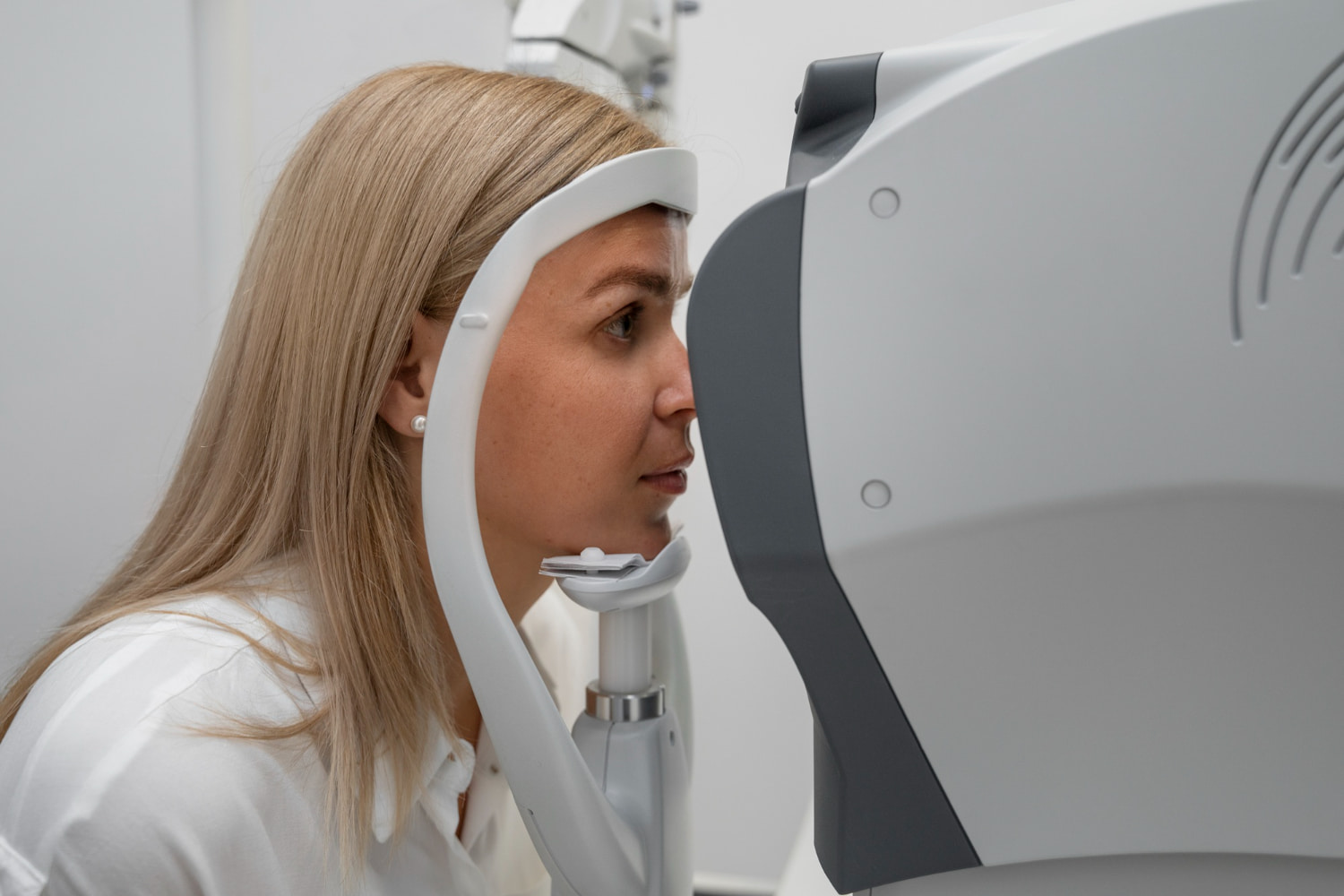
- Intraocular pressure: an important measurement when assessing the risk of glaucoma.
- Slit-lamp examination: examines the cornea, conjunctiva, iris and natural lens.
- Fundus examination: assesses the retina, macula and optic nerve.
- OCT: provides a detailed analysis of the retina or optic nerve.
- Visual field test: assesses peripheral vision.
- Corneal topography: analyses the shape of the cornea.
- Pachymetry: measures the thickness of the cornea.
Not every test is performed at every appointment. Your ophthalmologist will decide which tests are needed in your individual case.
You can find out more about our ophthalmic diagnostic tests.
When Should I Seek Care Without Waiting for My Scheduled Examination?
Do not wait until your next routine appointment if you develop:
- Sudden loss of vision.
- Sudden-onset blurred vision.
- Severe eye pain.
- Flashes of light.
- A sudden increase in floaters.
- A shadow or curtain across your field of vision.
- Double vision.
- A very red eye accompanied by pain or loss of vision.
- An eye injury.
- Contact with a chemical.
- Sudden difficulty moving one eye.
These symptoms may require emergency ophthalmic care.
Factors That May Make More Frequent Eye Examinations Necessary
Your ophthalmologist may recommend closer follow-up if any of the following factors are present:
- Diabetes.
- High blood pressure.
- Glaucoma or suspected glaucoma.
- A family history of eye disease.
- High short-sightedness.
- Previous eye surgery.
- Autoimmune conditions.
- Medication with potential effects on the eyes.
- Contact lens wear.
- Previous eye injuries.
- Retinal conditions.
- Loss of vision in one eye.
The frequency should be tailored to each patient’s level of risk and how their condition progresses.
Common Mistakes Relating to Eye Examinations
Waiting Until Your Vision Worsens Before Seeing an Ophthalmologist
Some conditions cause no symptoms in their early stages. Waiting until you notice vision loss may delay diagnosis.
Assuming That a Stable Prescription Means Your Eyes Are Healthy
Your prescription and your eye health are different matters. You may continue to use the same glasses while changes develop in the optic nerve or retina.
Stopping Check-Ups Because the Treatment Is Working
With chronic conditions such as glaucoma, keeping eye pressure stable does not remove the need for follow-up.
Not Attending Because There Is No Pain
Many important eye conditions do not cause pain.
Using the Same Examination Schedule for the Whole Family
Each person may need a different schedule according to their age, medical history and eye health.
Frequently Asked Questions About Eye Examinations
How Often Should an Adult Have an Eye Examination?
An eye examination every one or two years may serve as a general guide for adults with no symptoms or risk factors. Your ophthalmologist may recommend a different schedule depending on the findings.
Do I Need to See an Ophthalmologist Even If I Can See Well?
Yes. Some eye conditions can develop without initially affecting visual acuity.
At What Age Should I Have My Eye Pressure Checked?
Eye pressure can be measured during a comprehensive examination at any age when indicated. Monitoring becomes particularly important from the age of 40 and for people with a family history of glaucoma.
Is an Annual Eye Examination Excessive?
Not necessarily. It may be appropriate for older people, patients with risk factors, contact lens wearers or people with a known eye condition.
How Often Should a Child Have an Eye Examination?
It depends on the child’s age, routine paediatric checks, symptoms and medical history. If there is any concern, arrange an assessment without delay.
How Often Should Someone with Diabetes Have an Eye Examination?
People with diabetes need regular fundus examinations. These are often performed annually, although the interval may be shorter if diabetic retinopathy or another risk factor is present.
How Often Should Someone with Glaucoma Have an Eye Examination?
Glaucoma requires lifelong follow-up. The frequency may range from several check-ups a year to more widely spaced examinations in very stable cases.
Do I Need an Eye Examination If I Only Use Reading Glasses?
Yes. Needing reading glasses is not the only reason to have your eyes examined. It is also advisable to assess eye pressure, the natural lens, the retina and the optic nerve.
Should I Arrange an Earlier Examination If My Prescription Has Changed?
Yes, especially if the change has been rapid, affects only one eye or is accompanied by other symptoms.
What Is the Difference Between a Vision Test and an Ophthalmic Examination?
A vision test focuses mainly on visual acuity and your prescription. A comprehensive ophthalmic examination also checks for conditions affecting the structures of the eye.
The Frequency Should Be Tailored to Each Patient
There is no single schedule that is right for everyone.
Your age, family history, general health conditions, symptoms and the results of previous examinations determine how often you should see an ophthalmologist.
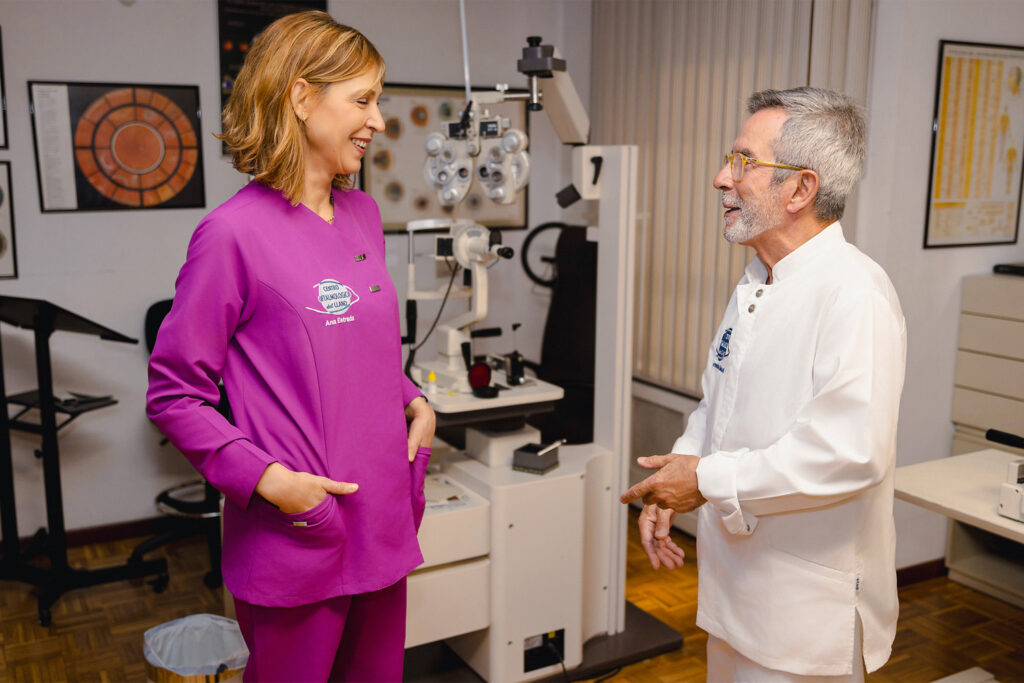
At Centro Oftalmológico del Llano, we provide a comprehensive examination tailored to the reason for your visit and your individual needs. The assessment may include refraction, eye pressure measurement, examination of the structures of the eye, a fundus examination and additional tests when necessary.
Regular eye examinations can detect changes before they significantly affect your vision and allow suitable follow-up to be established when a problem is identified.