


Is It Normal to Lose Vision as You Get Older? The Quick Answer
As the years pass, it is common to notice some changes in the way you see. It may become harder to focus up close, you may need more light to read, take longer to adapt to darkness or notice reduced contrast.
However, gradual or significant loss of vision should not be considered an inevitable consequence of ageing.
Age increases the risk of developing eye conditions such as:
- Cataracts.
- Glaucoma.
- Age-related macular degeneration.
- Retinal conditions.
- Dry eye.
- Eyelid problems.
Many of these conditions can be treated or managed more effectively when detected early.
If you notice sudden vision loss, distorted lines, a shadow or curtain, flashes of light, a sudden increase in floaters, double vision or severe eye pain, seek urgent ophthalmic assessment.
Which Changes in Vision Can Normally Occur with Age?
Ageing causes changes in different structures of the eye.
Some changes can be common and do not necessarily mean that you have a serious eye condition.
These include:
- Greater difficulty focusing on nearby objects.
- Needing more light to read.
- Taking longer to adapt when moving from a bright environment to a dark one.
- Increased sensitivity to glare.
- Difficulty distinguishing low-contrast objects.
- Increased eye dryness or irritation.
- Slight changes in colour perception.
These changes may be part of normal eye ageing, but they need to be distinguished from genuine vision loss caused by an eye condition.
Which Visual Changes Should Not Simply Be Attributed to Age?
Symptoms such as the following should not be dismissed as normal:
- Progressive loss of sharpness.
- Increasing difficulty recognising faces.
- Straight lines beginning to appear distorted.
- Dark spots in the centre of your vision.
- Loss of peripheral vision.
- Blurred vision in one eye.
- Frequent changes in prescription.
- Severe glare when driving at night.
- Difficulty carrying out everyday activities.
Although these problems are more common in older people, they may be related to eye conditions that require diagnosis and follow-up.
Why Does Vision Change as We Age?
The eye is made up of structures that also change over time.
These changes include:
- The natural lens becomes less flexible and may lose its transparency.
- The pupil tends to become smaller.
- The tear film may become less stable.
- The vitreous humour changes consistency.
- The retina and optic nerve may become more vulnerable to certain conditions.
- The eyelids may lose tone and change position.
These changes help explain why some visual tasks become more difficult with age.
However, any significant loss of vision should be assessed to identify the exact cause.
Main Causes of Age-Related Vision Loss
1. Presbyopia or Age-Related Long-Sightedness
Presbyopia is one of the most common visual changes from around the age of 40 or 45.
It occurs because the natural lens gradually loses its ability to change shape and focus on nearby objects.
Common symptoms include:
- Needing to hold your phone or a book farther away.
- Difficulty reading small print.
- Eye strain during close-up tasks.
- Headaches after reading.
- Needing more light.
Presbyopia does not usually cause irreversible vision loss. It can be corrected with:
- Reading glasses.
- Varifocal glasses.
- Contact lenses.
- Certain surgical options for suitable patients.
2. Cataracts
Cataracts develop when the natural lens loses its transparency.
The natural lens should be clear so that light can reach the retina properly. When it becomes cloudy, vision begins to deteriorate.
Symptoms can include:
- Blurred or cloudy vision.
- The sensation of looking through a dirty window.
- Glare.
- Halos around lights.
- Difficulty driving at night.
- Colours appearing less vivid.
- Frequent changes in prescription.
- Needing brighter light to read.
Cataracts usually progress slowly.
Surgery is recommended when vision loss affects quality of life and makes activities such as driving, reading, working or moving around safely more difficult.
During surgery, the cloudy natural lens is replaced with an intraocular lens.
Find out more on our cataract surgery page.
3. Glaucoma
Glaucoma is a condition that progressively damages the optic nerve.
It often causes no symptoms in its early stages.
Central vision may appear to remain good while part of the peripheral visual field is gradually lost.
When the condition is advanced, symptoms may include:
- Difficulty detecting obstacles to the side.
- Difficulty driving.
- Feeling less confident when walking.
- A reduced visual field.
- Significant loss of vision.
Vision lost because of glaucoma cannot usually be restored. The aim of treatment is to reduce the risk of progression and preserve the remaining vision.
Regular eye examinations and follow-up with tests such as eye pressure measurement, OCT and visual field testing are therefore essential.
Find out more about glaucoma diagnosis and treatment.
4. Age-Related Macular Degeneration
Age-related macular degeneration affects the macula, the central area of the retina responsible for fine, detailed vision.
It can make the following activities difficult:
- Reading.
- Recognising faces.
- Seeing small details.
- Driving.
- Distinguishing lines and shapes accurately.
Symptoms include:
- Blurred central vision.
- Straight lines appearing wavy.
- Dark or empty spots in the centre of your vision.
- Difficulty recognising faces.
- Needing more light.
The condition may progress slowly or change rapidly, depending on the type.
If you begin to see distorted lines or notice a new central spot, seek an assessment without delay.
5. Dry Eye
Tear production and tear quality can change with age.
This makes dry eye more common in older people.
It can cause:
- Stinging or burning.
- A gritty sensation.
- Reflex tearing.
- Intermittent blurred vision.
- Discomfort in windy conditions.
- Greater sensitivity to air conditioning.
- Difficulty using screens.
Blurred vision caused by dry eye may temporarily improve when you blink.
Although it does not usually cause profound vision loss, it can significantly affect comfort and visual quality.
Learn more about our dry eye treatments.
6. Diabetic Retinopathy
Diabetes can damage the blood vessels in the retina.
In its early stages, diabetic retinopathy may cause no symptoms.
As it progresses, it can cause:
- Blurred vision.
- Floaters.
- Difficulty seeing in low light.
- Spots in the visual field.
- Partial or significant loss of vision.
People with diabetes should follow the recommended eye examination schedule even if they believe their vision is normal.
Good control of blood glucose, blood pressure and other cardiovascular risk factors helps reduce the risk of progression.
7. Changes in the Vitreous Humour
The vitreous is the clear gel that fills much of the inside of the eye.
Over time, it can become more liquid and gradually separate from the retina.
This process can cause:
- Floaters.
- Dots or thread-like shapes that move with your gaze.
- Flashes of light.
In many cases, these changes are not serious.
However, the sudden appearance of many floaters, flashes or a shadow in your vision may indicate a retinal tear or detachment and requires urgent assessment.
8. Retinal Vascular Problems
High blood pressure, diabetes and other vascular risk factors can affect the circulation in the retina.
A blockage in a retinal artery or vein can cause sudden or progressive vision loss.
The effect on vision may be:
- Central.
- Partial.
- Limited to one eye.
- Painless.
Sudden loss of vision in one eye requires urgent medical attention.
9. Eyelid Changes
As we age, the tissues of the eyelids can lose tone.
This can contribute to:
- A drooping eyelid.
- Excess skin.
- Entropion, when the eyelid turns inwards.
- Ectropion, when the eyelid turns outwards.
- Eyelashes rubbing against the cornea.
- Constant watering.
- Difficulty closing the eye completely.
These changes can affect the visual field, tear drainage and protection of the eye’s surface.
Assessment by a specialist in eyelid surgery and oculoplastics can distinguish a functional problem from one that is purely cosmetic.
Is It Normal to Need More Light to Read as You Get Older?
Yes, this is common.
Over time, the pupil usually becomes smaller, allowing less light into the eye.
The natural lens may also transmit light less effectively.
As a result, some people need:
- Brighter lighting.
- Greater contrast between text and background.
- Reduced glare and reflections.
- To move closer to the light source.
Needing slightly more light can be a normal change.
However, if the difficulty increases rapidly or prevents you from reading even in good light, you should have an eye examination.
Is It Normal to See Less Well at Night as You Get Older?
Night vision can deteriorate with age.
This may be due to:
- Slower adaptation to darkness.
- Less light entering through the pupil.
- Reduced contrast sensitivity.
- Cataracts.
- Retinal conditions.
- An outdated prescription.
Some people particularly notice:
- Glare from headlights.
- Halos around lights.
- Difficulty distinguishing pedestrians or obstacles.
- Feeling unsafe when driving at night.
These symptoms should be assessed when they interfere with driving.
Is It Normal for Colours to Look Less Vivid?
Ageing can cause slight changes in colour perception.
The natural lens can gradually develop a yellowish tint and alter the way light passes through it.
Cataracts can also cause:
- Colours to appear less vivid.
- White tones to appear yellowish.
- Reduced contrast.
- Greater difficulty distinguishing similar colours.
A marked or sudden change in colour perception should be assessed.
Is It Normal to Take Longer to Adapt to Darkness?
Yes. Adapting between environments with different lighting can become slower with age.
For example, you may need more time to see clearly when entering:
- A cinema.
- A garage.
- A dimly lit room.
- A road at night after leaving a brightly lit area.
If the difficulty is severe, mainly affects one eye or is accompanied by other changes, retinal or optic nerve disease should be ruled out.
Can Age-Related Vision Loss Be Prevented?
Not all changes in the eye can be prevented, but some risks can be reduced.
The main recommendations are:
- Have regular eye examinations.
- Keep diabetes under control.
- Keep your blood pressure within the recommended range.
- Do not smoke.
- Wear suitable sun protection.
- Follow a balanced diet.
- Stay physically active.
- Use glasses and contact lenses correctly.
- Avoid self-medicating with eye drops.
- Seek advice about any new change in your vision.
Early detection cannot always prevent a condition from developing, but it may allow treatment before significant vision loss occurs.
How Often Should an Older Person Have an Eye Examination?
The frequency depends on age, medical history and eye health.
As a general guide, an older person with no known eye condition may have a routine eye examination every one or two years.
Follow-up should be more frequent if you have:
- Glaucoma or suspected glaucoma.
- Diabetes.
- Macular degeneration.
- Progressing cataracts.
- High short-sightedness.
- Previous eye surgery.
- A significant family history of eye disease.
- Treatments that may affect the eyes.
You can find out more in our article on how often to have an eye examination.
Which Tests Can Be Used to Investigate Vision Loss?
The examination will depend on your symptoms and medical history.
This may include:
- Visual acuity: measures how well each eye can see.
- Refraction: checks for short-sightedness, long-sightedness, astigmatism or presbyopia.
- Intraocular pressure: helps assess the risk of glaucoma.
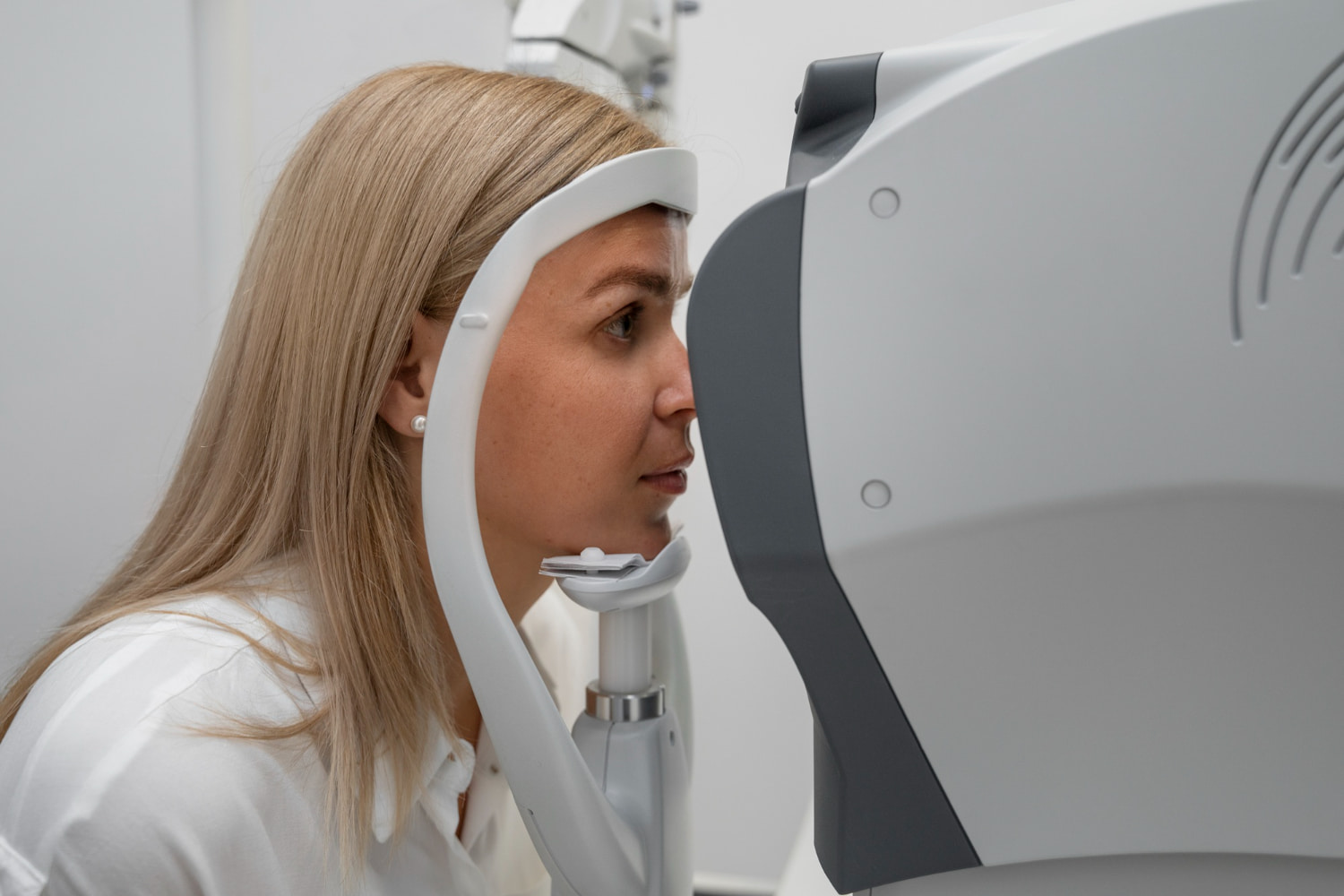
- Slit-lamp examination: allows the cornea, iris and natural lens to be examined.
- Fundus examination: assesses the retina, macula and optic nerve.
- OCT: provides a detailed analysis of the retina and optic nerve.
- Visual field test: assesses peripheral vision.
- Amsler grid: can detect distortion in central vision.
- Contrast sensitivity tests: assess the ability to distinguish poorly defined objects.
Not every patient needs every test. Your ophthalmologist will select the most appropriate ones for your individual case.
You can find out more about our ophthalmic diagnostic tests.
When Is Vision Loss an Emergency?
Seek urgent medical attention if you experience:
- Sudden loss of vision in one or both eyes.
- A shadow or curtain across your field of vision.
- A sudden increase in floaters.
- New flashes of light.
- Straight lines beginning to appear distorted.
- A sudden dark spot in the centre of your vision.
- Sudden-onset double vision.
- Severe eye pain.
- A very red eye accompanied by reduced vision.
- Vision loss after an injury.
- Difficulty speaking or weakness together with visual changes.
These symptoms should not simply be attributed to age.
They may require urgent ophthalmic care.
Can Age-Related Vision Loss Be Restored?
It depends on the cause.
| Cause | Potential for Improvement |
| Presbyopia | Can be corrected with glasses, contact lenses or other options |
| Cataracts | Surgery can restore a significant amount of vision |
| Dry eye | Treatment can improve comfort and visual quality |
| Glaucoma | Lost vision usually cannot be restored, but progression can be slowed |
| Macular degeneration | Depends on the type and severity |
| Outdated prescription | Can improve with the correct optical correction |
| Eyelid changes | Correction can improve function and the visual field |
This is why it is so important to identify the cause before assuming there is no solution.
Common Mistakes When Dealing with Age-Related Vision Loss
Assuming That Vision Loss Is Inevitable
Age increases the risk of eye disease, but significant vision loss should not be considered normal without an assessment.
Only Changing Your Glasses
A new prescription may improve vision, but it does not treat cataracts, glaucoma, macular degeneration or other eye conditions.
Waiting Until You Develop Pain
Many eye conditions that affect vision do not cause pain.
Stopping Driving Without Finding Out the Cause
In some cases, the difficulty may improve with a new prescription, dry eye treatment or cataract surgery.
Not Seeking Advice Because One Eye Still Sees Well
The eye with better vision can mask deterioration in the other eye for a long time.
Stopping Follow-Up When the Condition Is Stable
Glaucoma, diabetes and other conditions require follow-up even when you do not notice any changes.
Frequently Asked Questions About Age-Related Vision Loss
Is It Normal to See Less Well After the Age of 40?
Presbyopia commonly develops, making it harder to focus up close. However, a general loss of sharpness or a significant reduction in vision should be assessed.
Is Vision Loss Inevitable as You Get Older?
No. Some changes are common, but significant vision loss is usually linked to an eye condition, an unsuitable prescription or another cause that can be treated or managed.
At What Age Do Cataracts Usually Develop?
Age-related cataracts can begin to develop in adulthood and become more common over the years. Their progression varies from person to person.
Why Is My Vision Worse at Night?
It may be due to slower adaptation to darkness, cataracts, reduced contrast sensitivity, retinal problems or an outdated prescription.
Can Vision Lost Because of Glaucoma Be Restored?
Generally, no. Treatment aims to prevent or slow further damage.
Is It Normal to See Distorted Lines as You Get Older?
No. This may indicate a problem with the macula and should be assessed, especially if it is new or appeared suddenly.
Is It Normal to Need More Light to Read?
Yes, this can be a normal change. Even so, if the difficulty progresses or reading remains difficult in good light, you should have your eyes examined.
Why Do Colours Look Less Vivid?
This may be due to changes in the natural lens or cataracts. A marked change or one affecting only one eye requires assessment.
Is Blurred Vision Always Caused by Cataracts?
No. It can also be caused by an incorrect prescription, dry eye, glaucoma, retinal disease, diabetes and other problems.
How Often Should an Older Person See an Ophthalmologist?
The frequency depends on your medical history and eye health. As a general guide, examinations may be recommended every one or two years, or more often if you have an eye condition.
Which Doctor Assesses Vision Loss?
An ophthalmologist can assess your prescription and examine the structures of the eye to identify the cause.
When Should I Seek Urgent Care?
When vision loss occurs suddenly or is accompanied by flashes, new floaters, a curtain or shadow, distorted lines, severe pain or double vision.
Getting Older Does Not Mean Resigning Yourself to Poorer Vision
Age can cause changes in focusing, contrast sensitivity, adaptation to darkness and the amount of light needed for reading.
However, progressive vision loss or loss that affects daily activities should not be assumed to be inevitable.
At Centro Oftalmológico del Llano, we carry out a comprehensive examination to distinguish normal age-related changes from conditions such as cataracts, glaucoma, macular degeneration or ocular surface disease.
Identifying the cause allows us to recommend the most appropriate treatment or follow-up and help preserve the best possible vision for longer.